Can Cloud Seeding Help Tackle Delhi’s Air Pollution?
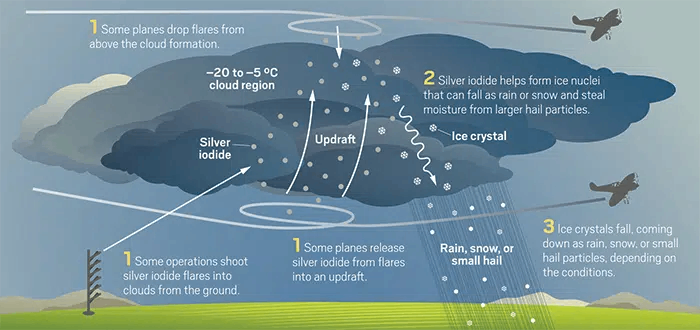
CAS students, mentored by faculty members, have prepared an exhaustive report (over three days during a hackathon) on 'cloud seeding.' The report critically examines whether cloud-seeding is a viable option for reducing air pollution, taking into account various scientific factors such as atmospheric stability, thermodynamic conditions, aerosol-cloud interaction, and washout and recovery rate.
Link to the report
Prepared by CAS PhD students (in alphabetical order): Aasif Ahmad Wagay, Aiswarya Ramachandran, Alice Jeeva P J, Anirudh K M, Aparna Aparajita, Ardra D, Chaithra S T, Charudatt J Puri, Debjit Paul, Dhishana P R, Emili Singha Roy, Gobinda Manna, Joswin P Joy, Pankaj Lal Sahu, Payel Kundu, Rupanjan Banerjee, Sanya Narbar, Saran Rajendran, Shreya Srivastava, Sojol Das, Subhadeep Ghosh, Tanerao Singh Sankhla, and Vasu Singh.
Mentors (in alphabetical order): Prof. Krishna Mirle Achutarao, Prof. Sagnik Dey, Prof. Sajeev Philip, Prof. Sandeep Sukumaran, and Prof. Shahzad Gani.
The report has been cited by various news agencies such as The Hindu, The Indian Express, The Times of India, Hindustan Times, The Tribune, and more.