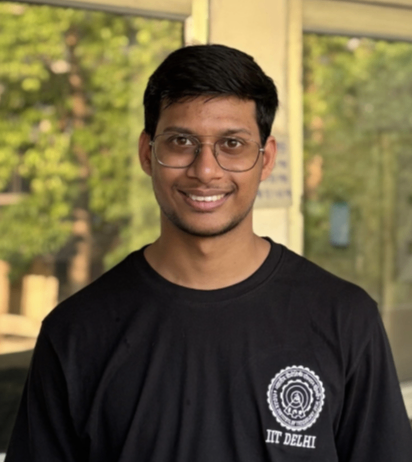
Pankaj Lal Sahu
Admission Year
2023
Graduation Year
2021
asz238477@cas.iid.ac.in
Unique identification No
2023ASZ8477
Program
PhD
Description
I'm a Ph.D. scholar at the Centre for Atmospheric Sciences, IIT Delhi, where my research revolves around understanding and predicting extreme weather events, especially tropical cyclones and the Indian Summer Monsoon — through the lens of machine learning and climate dynamics. With a background in mechanical engineering and a master's in climate science from IIT Bhubaneswar, I’ve always been intrigued by the powerful, chaotic systems that drive our weather. My current work aims to improve the forecasting of tropical cyclones and monsoon variability by integrating physical principles with data-driven models. By combining reanalysis data, theoretical frameworks, and AI-based tools, I aim to improve our ability to simulate and forecast cyclone structure, track, and intensity. I’m particularly interested in how global machine learning models represent (or fail to represent) key dynamic features like warm-core structure, asymmetric inflow, and eyewall processes, and how we can correct or enhance these models through physics-informed approaches.
Faculty Advisors
Prof. Sandeep Sukumaran and Prof. Hariprasad Kodamana